
 English
 Spanish
 Persian
 Russian
PET bottle recycling is a sophisticated, multi-stage engineering process that transforms a common waste item into a valuable industrial raw material, closing the loop in a sustainable circular economy.
Why recycle PET bottles?
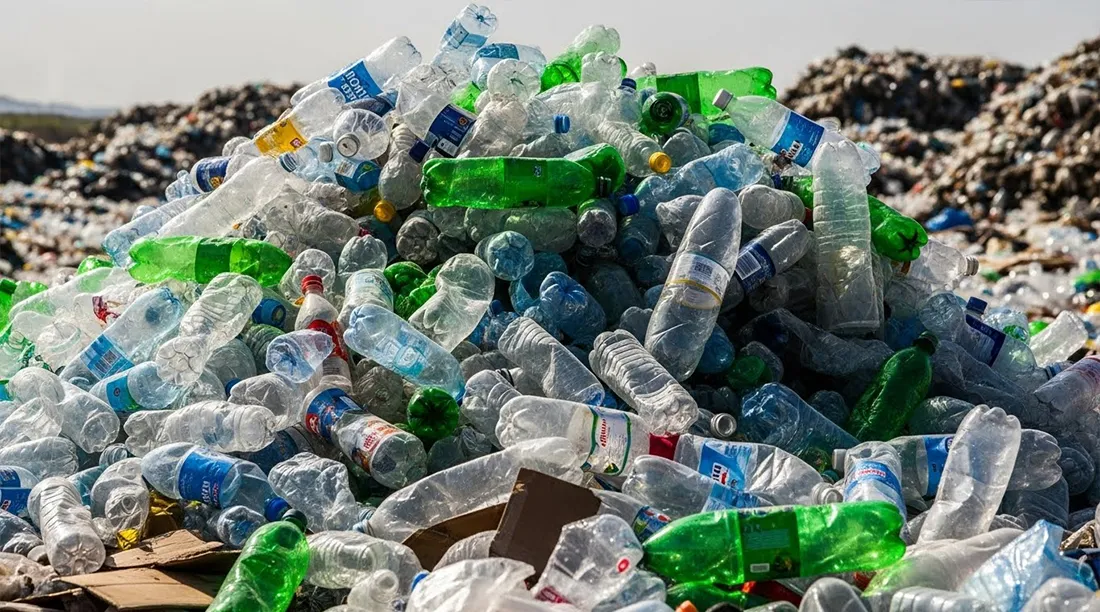
Polyethylene Terephthalate (PET) is one of the most common plastics used for beverage bottles, food containers, and textiles.
Conserves Resources: Reduces the need for virgin petroleum-based materials.
Saves Energy: Manufacturing with recycled PET (rPET) uses significantly less energy than producing new PET.
Reduces Landfill Waste: PET bottles are a major component of plastic waste.
Promotes a Circular Economy: Turns waste into a valuable resource for new products.
PET Bottle Recycling Line Process:
1. Label and Cap Removal: Bottles are fed into a label remover (or de-labeling machine), which uses friction (often with rotating brushes or drums) to tear off the plastic or paper labels. The bottles then pass through an air classifier (or air separator), where a powerful air stream blows away the lightweight labels and caps.
2. Manual Sorting: Bottles pass on a slow-moving conveyor belt where workers manually remove any non-PET items, colored PET bottles (if the line is focused on clear rPET), and contaminants that the machines missed.
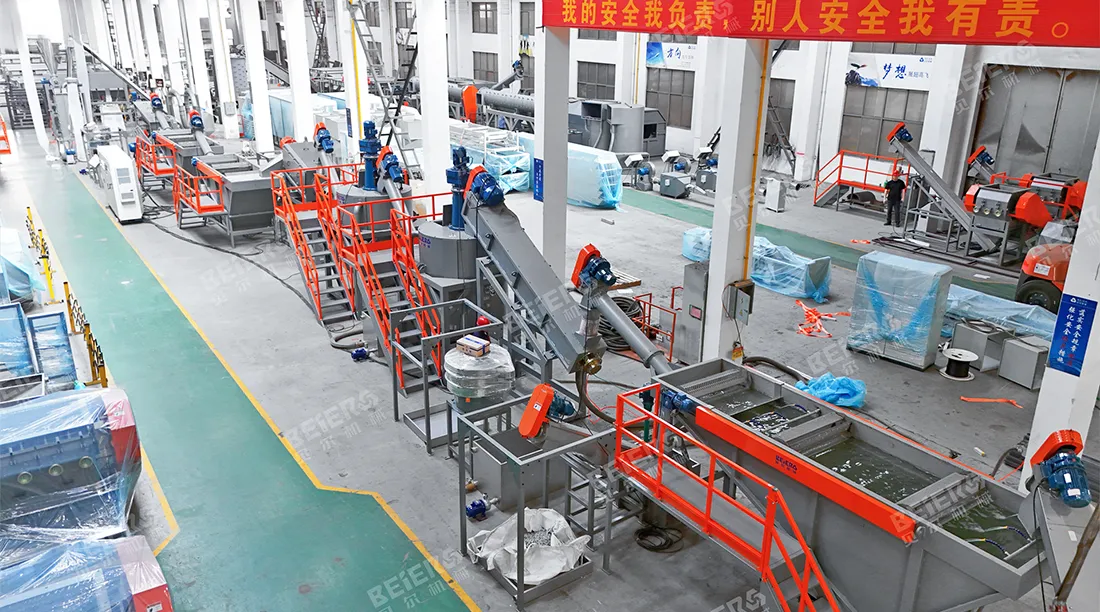
3. Washing & Pre-Washing: The bottles enter a pre-washer or hot caustic soda wash tank. This first wash uses hot water and detergent to remove dirt, glue, and other surface contaminants.
4. Grinding: The clean whole bottles are fed into a granulator or grinder. This machine uses rotating blades with fixed bed knives to shred the bottles into small, uniform pieces called “flakes” (typically 6-12mm).
5. Hot Washing: Flakes are agitated in a hot wash tank with detergent to remove any remaining contaminants.
6. Sink-Float Tank (Hydrocyclone): This critical step separates PET from other plastics. Flakes are fed into a tank or hydrocyclone where water is circulated.
7. Drying: The wet flakes are fed into a centrifugal dryer (which spins off the majority of the water) and then often a hot air dryer (which uses heated air to evaporate any remaining moisture).
8. Metal Detector: Flakes pass through a metal detector to remove any ferrous or non-ferrous metal fragments.
9. NIR (Near-Infrared) Optical Sorter: This high-tech machine uses infrared light to identify and eject any remaining non-PET or colored PET flakes based on their unique molecular signature. It uses precisely timed air jets to blow contaminants off the main stream.
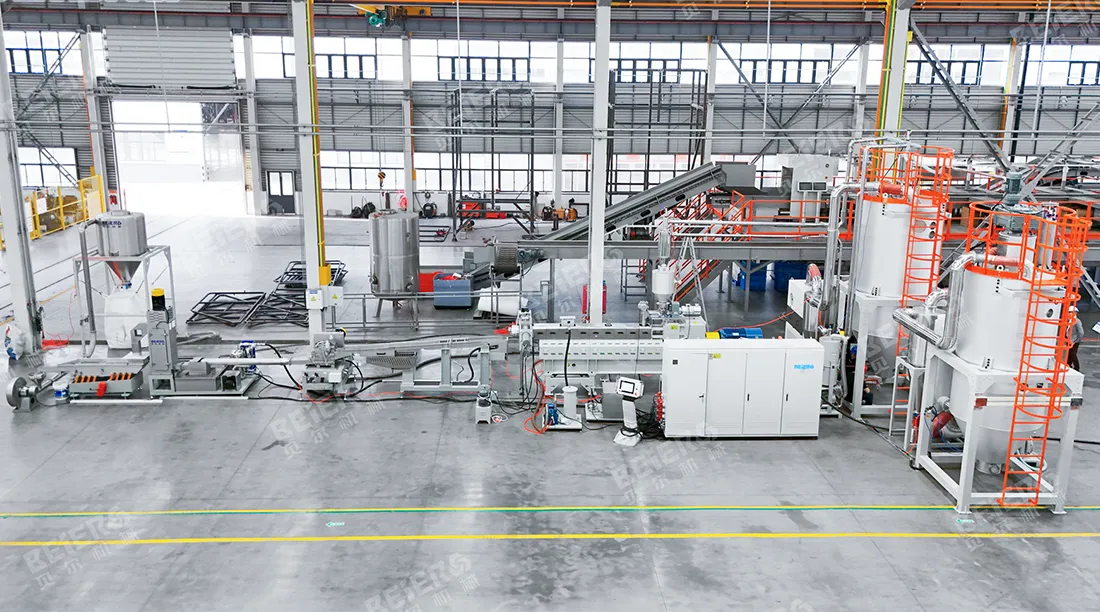
10. PET Pelletizing Machine: Flakes are fed into an extruder. They are melted, filtered through a melt filter (to remove any micro contaminants), and then forced through a die to create spaghetti-like strands. These strands are cooled in a water bath and cut into uniform pellets.
Considerations for Setting Up PET Recycling Line:
1. Input Material: The quality and consistency of the incoming bales will determine the complexity of the sorting and washing needed.
2. Desired Output Quality: A line for fiber production is less complex than one for food-grade pellets.
3. Capacity: PET recycling line can range from small (500 kg/hr) to very large (8000+ kg/hr).
4. Automation: Higher automation reduces labor costs but increases initial investment.
5. Water & Energy Consumption: Modern lines focus on water recycling loops and energy-efficient machinery to reduce operating costs and environmental impact.
6. Regulations: Ensure the process and output comply with local and international health and safety standards (e.g., FDA, EFSA).
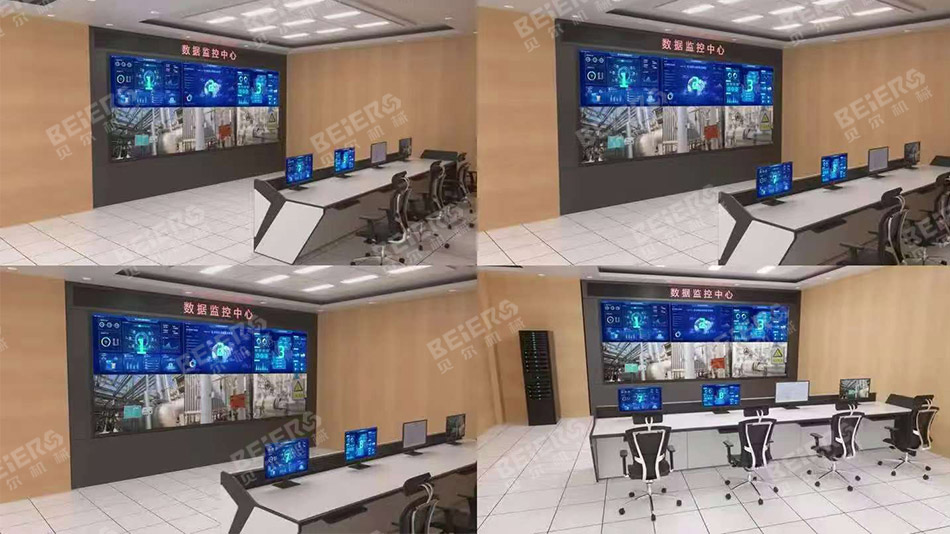
Plastic Recycling Monitor Center
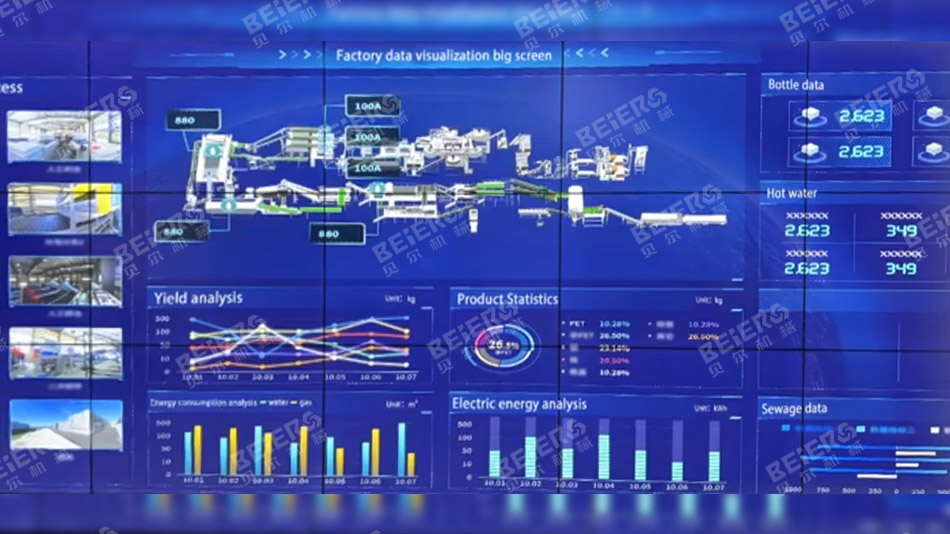
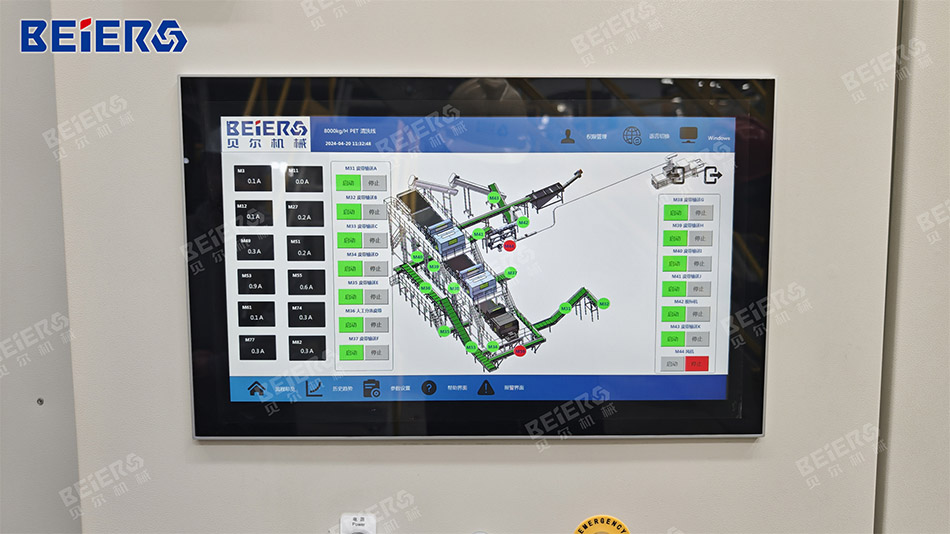
BEIER Smart PLC Control System

 whatsApp:+86-13814880186
 English
  Spanish
  Persian
  Russian