
 English
 Spanish
 Persian
 Russian
Squeezing Dryer Technology: Solution for PE PP Film Dewatering
In the world of post-consumer plastic recycling, processing PE (Polyethylene) and PP (Polypropylene) films has always been a battle against moisture. Traditional centrifugal dryers often leave film materials too wet for high-quality extrusion. To solve this, BEIER Machinery has unveiled its latest squeezing dryer technology, setting a new industry standard for dewatering efficiency.
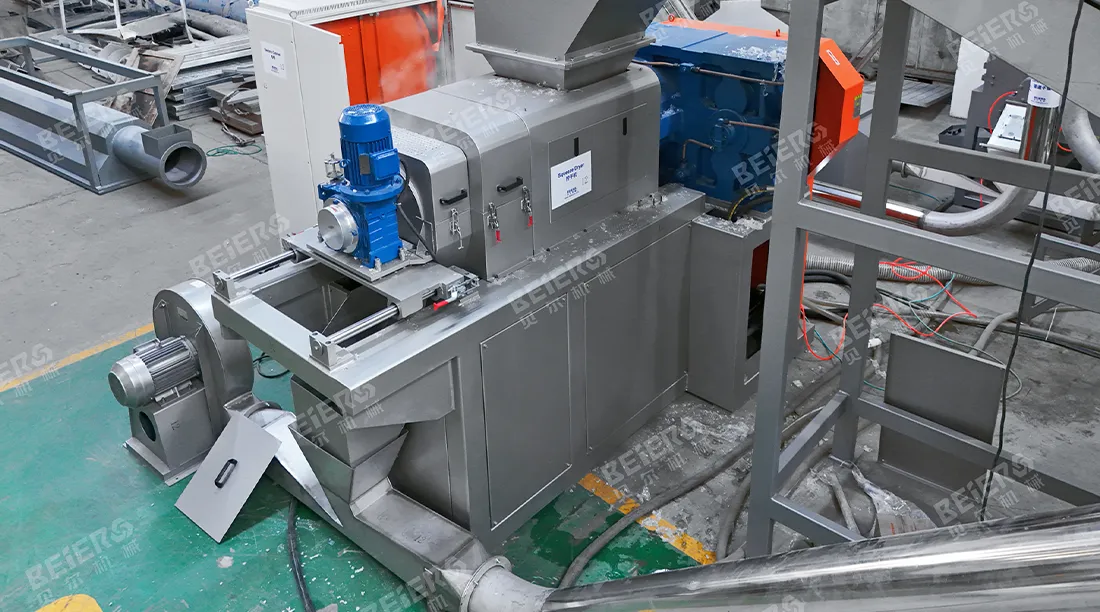
Working Principle of Squeezing Dryer:
Unlike traditional methods that rely on high-speed rotation to “fling” water off, the Squeezing Dryer utilizes a high-torque screw and a specialized perforated barrel. As the wet film is conveyed through the tapering screw, it undergoes intense mechanical compression.
- Extreme Dewatering: The mechanical pressure forces water out through the barrel holes, reducing moisture from 40% down to a remarkable 3% – 5%.
- Material Semi-Plasticization: The friction generated during squeezing pre-heats the material, turning fluffy film into dense, semi-molten flakes. This increases the bulk density, making the material much easier to feed into the subsequent pelletizing extruder.
Advantages for Squeezing Machine:
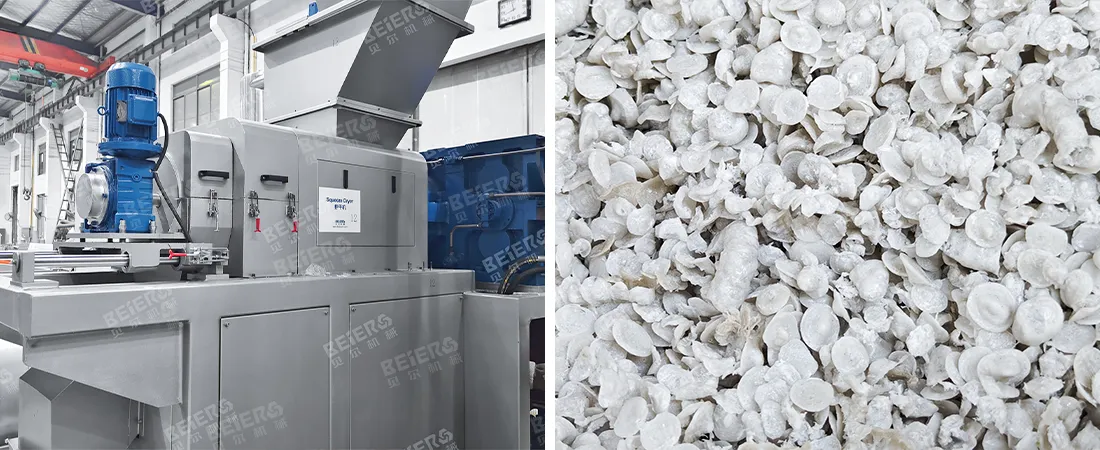
- Massive Energy Savings: By removing the vast majority of water mechanically, the need for energy-heavy thermal drying pipes is virtually eliminated. This can reduce the PE film recycling line‘s energy consumption by up to 30%.
- Superior Pellet Quality: Lower moisture input into the extruder means fewer bubbles, higher density, and better transparency in the final plastic granules.
- Reduced Footprint: One squeezing dryer can replace a series of centrifugal dryers and hot-air pipes, saving valuable factory floor space.
Video for Squeezing Machine:
FAQ:
Q: Why is squeezing dryer better than centrifugal dryer for thin films?
A: Thin films have a high surface area and tend to trap water in folds. Centrifugal dryers only remove surface water. A Squeezing Dryer “wrings” the material out like a sponge, reaching moisture levels that centrifugal forces simply cannot achieve.
Q: Does the squeezing process damage the plastic polymer?
A: No. The heat generated is frictional and stays below the degradation temperature of PE and PP. In fact, the semi-plasticization actually improves the homogenization of the material during the later extrusion phase.
Q: Can this machine handle PP woven bags and raffia?
A: Absolutely. It is highly effective for both PE film and PP woven bags, providing a consistent output density that stabilizes the entire recycling line.
Why Partner with BEIER Machinery?
With 27 years of expertise, BEIER Group have delivered customized solutions to clients in over 150 countries.
- Proven Authority: National High-Tech Enterprise with over 1,000 customer references.
- Global Reliability: Nine consecutive years as the leading exporter in Zhangjiagang.
- Innovation Focused: Specialized R&D centers for post-consumer plastic and recycling.
When you choose BEIER, you choose a partner dedicated to your long-term profitability and technical excellence.
Please write your machine inquire Email, Phone Number and Company Name here, we will respond within 12h. Or you can directly contact us: Email: info@beierpm.com or at Whatsapp/Wechat +86 13814880186.
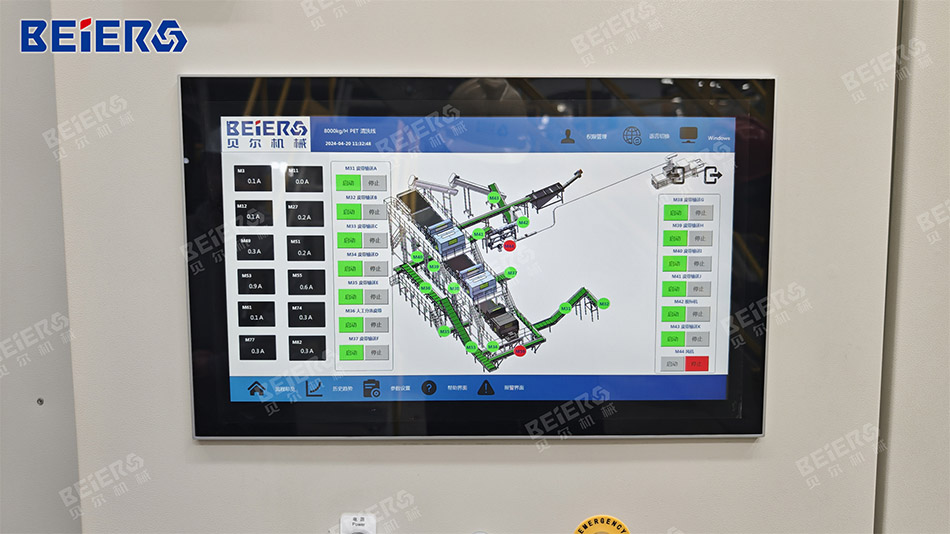
Plastic Recycling Monitor Center
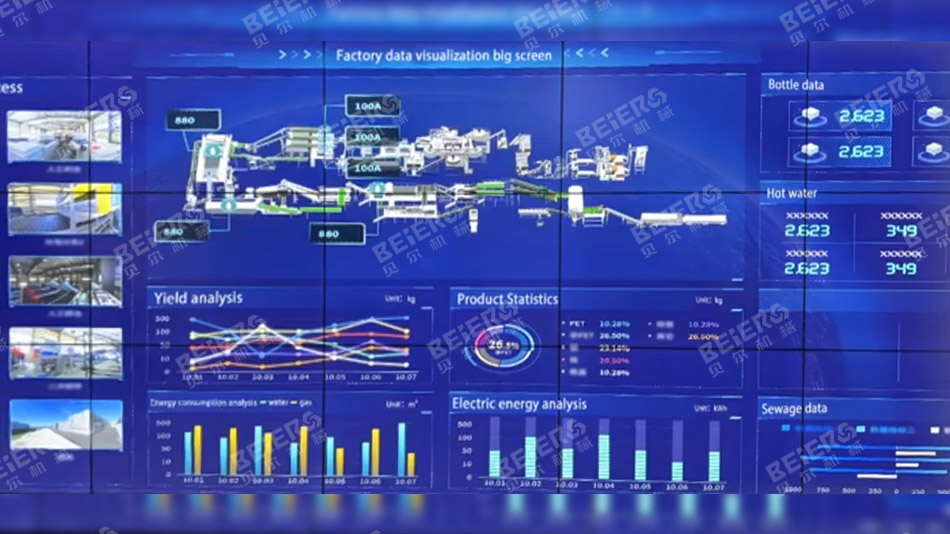
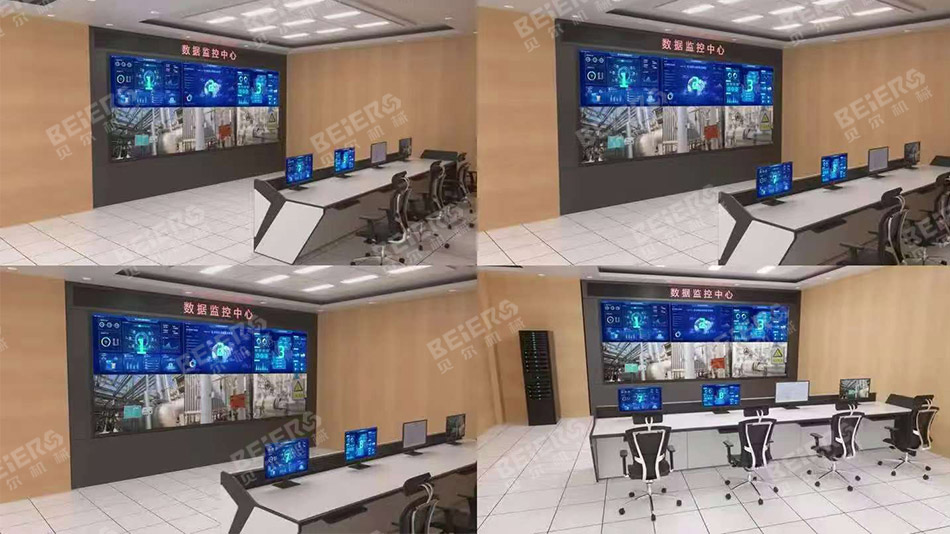
BEIER Smart PLC Control System

 whatsApp:+86-13814880186
 English
  Spanish
  Persian
  Russian