 English
 Spanish
 Persian
 Russian
Rigid ABS Plastic Recycling Washing Line Description:
Recycling Acrylonitrile Butadiene Styrene (ABS) rigid plastics from waste electrical and electronic equipment (WEEE), home appliances, and automotive trim scrap presents specific engineering challenges. Unlike soft polyolefin films, rigid ABS scrap carries tough contaminants such as embedded metal inserts, flame retardants, paint coatings, heavy oils, and mixed polymers like PS or PC.
To overcome these challenges, BEIER provides 1100kg/h rigid ABS plastic recycling washing line solution for rigid ABS plastics, helping remove metals, labels, dust, oil, and other impurities through crushing, washing, separation, drying, and packing processes.
First and foremost, this high-capacity ABS recycling line uses a modular architecture. As a result, it can easily process diverse input scrap, including refrigerator inner liners, computer housings, TV frames, and automotive bumpers. While the line is designed to deliver continuous high throughput, it also efficiently separates both heavy and light impurities. Consequently, bulky rigid scrap is converted into clean, dry flakes with purity levels reaching up to 98–99%.
Moreover, by combining mechanical crushing, continuous metal and light impurity removal, hot washing, and PLC control, this ABS plastic recycling line ensures consistent output quality with minimal manual intervention.
Rigid ABS Plastic Recycling Line Application:

Rigid ABS Plastic Washing Line Features:
- Metal and Light Impurity Removal:

Raw feedstock passes through high-efficiency over-belt magnetic separators and eddy current sorters to extract ferrous screws, clips, and non-ferrous metals. Furthermore, integrated air classification (zig-zag separators) removes light contaminants such as paper labels, dust, and thin plastic films prior to wet processing.
- Wet Grinder & Primary Washing:

Heavy-duty granulators equipped with wear-resistant SKD-11 blades crush rigid pieces down to a uniform 10–14mm size. Water injection inside the rotor chamber cools the cutting blades and immediately scrubs surface dirt.
- Hot Washing & Deep Cleaning:

To eliminate stubborn oil stains, grease, and adhesive residues commonly found on industrial and WEEE scrap, the line features a continuous hot washing and deep cleaning module. Utilizing heated water and specialized cleaning agents, this stage strips stubborn surface contaminants without compromising the structural integrity of the ABS resin.

- Density Separation (Salt Water Tank):
An engineered saline flotation tank enables precise sink-float separation based on specific gravity, effectively isolating ABS flakes from heavy sinkables like PVC or glass-filled polymers.
- Centrifugal Dewatering & Hot Air Drying:
A high-speed vertical centrifuge extracts surface moisture, followed by a thermal pipe dryer to lower final moisture content below 1.0%.
- PLC-Controlled Operation:
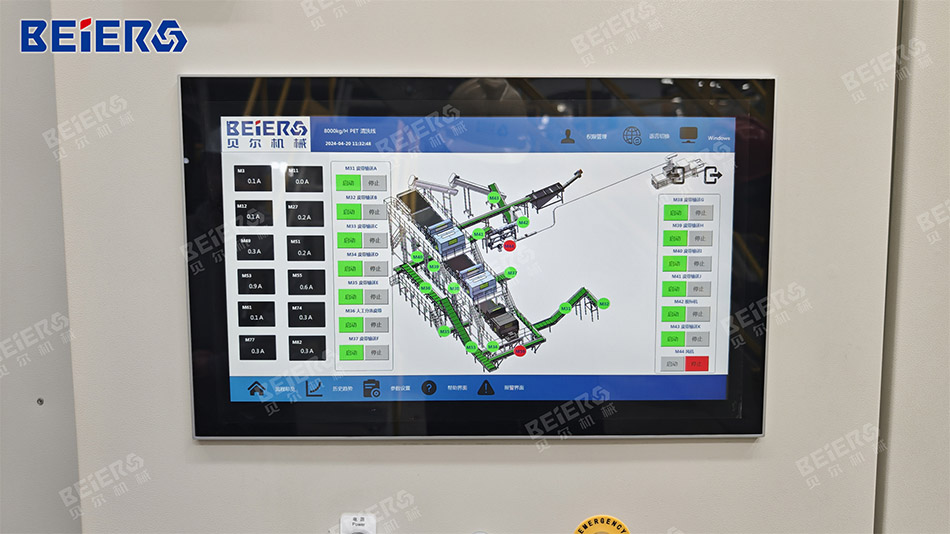
The entire process is controlled via a centralized Siemens PLC touchscreen interface. Operators can monitor throughput, water temperature, amperage loads, and diagnostic alerts in real time, guaranteeing system stability and operational safety.
Why Upgrade to a Specialized ABS Washing Line?
Processing engineered plastics demands higher mechanical rigidity and strict quality controls compared to soft polyolefins. Investing in a specialized 1100kg/h ABS washing line equips recyclers with high hourly yields, lower energy consumption per ton, reduced knife wear, and minimal labor overhead thanks to automated PLC monitoring. The clean output flakes command premium pricing among masterbatch manufacturers and compounding facilities worldwide.
FAQ:
Q1: What capacity does this ABS washing line deliver?
A: It provides a stable output capacity of 1100 kg/h for rigid ABS scrap from WEEE and appliance sources.
Q2: How are metals and light impurities removed?
A: Magnetic and eddy current separators eliminate all ferrous and non-ferrous metals from the stream. Air classifiers then purge paper labels, dust, and light films.
Q3: Why is hot washing & deep cleaning necessary?
A: It effectively dissolves stubborn oils, grease, and adhesives that standard cold friction washing cannot remove.
Q4: How does the PLC control system help operators?
A: The PLC system automates speeds, monitors motor loads and water temperatures, and provides real-time alerts to reduce manual labor.
Q5: What is the final moisture content of the flakes?
A: Surface moisture is maintained below 1.0% via centrifugal dewatering and hot air drying, making flakes ready for extrusion.
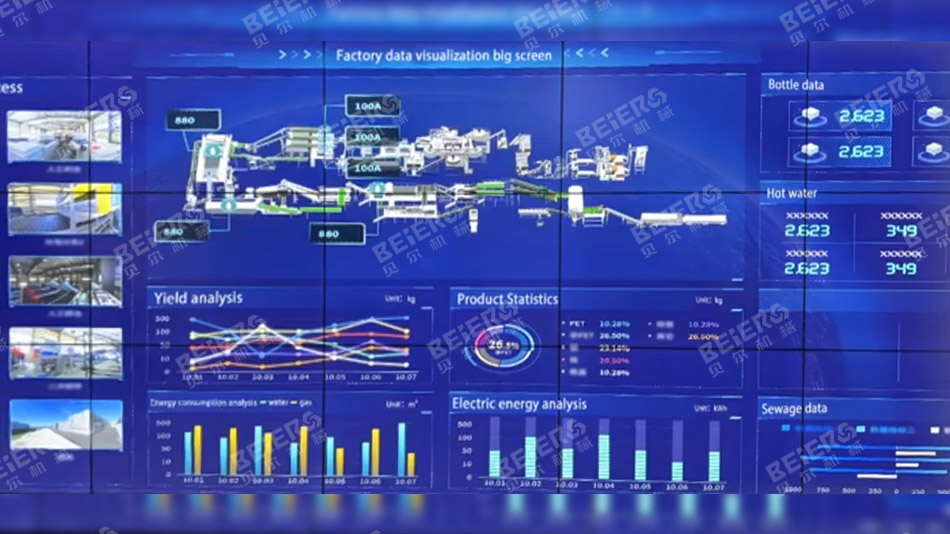
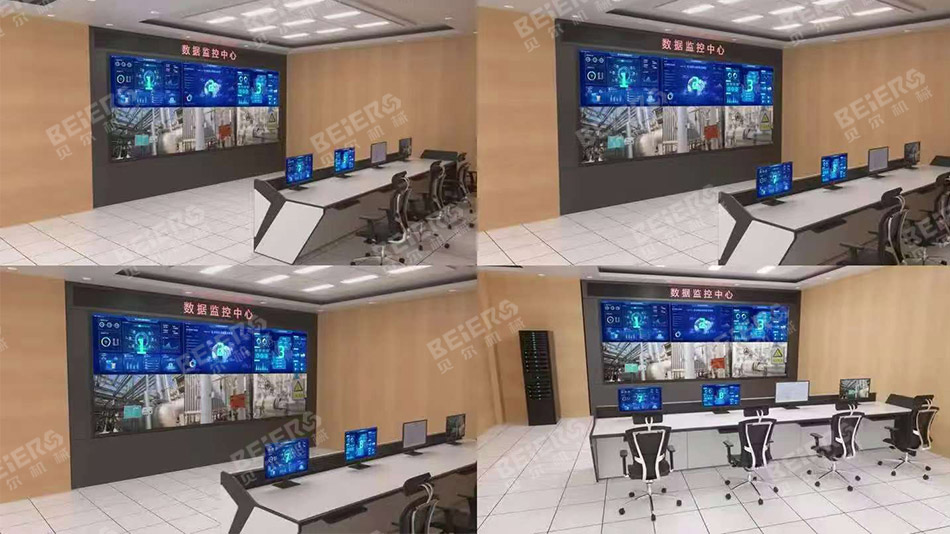
Plastic Recycling Monitor Center
BEIER Smart PLC Control System

 whatsApp:+86-13814880186
 English
  Spanish
  Persian
  Russian